
What is involved in installing ducted air conditioning?
A ducted installation is a significant job that needs careful planning, skilled work and the right licences. From the first site visit to the final handover, each stage affects how comfortable, efficient and reliable the finished system will be. Knowing the steps helps you compare quotes and prepare your home.
In Queensland and New South Wales, a ducted installation involves refrigerant work (which needs an Australian Refrigeration Council licence), electrical work (which needs a licensed electrician) and building work (which may need a builder’s licence). Frost Solutions holds ARCtick authorisation AU064493, QBCC licence 15409367 and electrical licences in Queensland (1505904) and New South Wales (357593C). Here is how a typical job runs.
1. How is the project scope worked out?
It starts with a site visit. We look at the home’s layout, size, roof space, switchboard and where the outdoor unit can go, and talk through which rooms you want cooled, how you use them and any concerns. For new builds, we work from the plans with you or your builder.
This is where unusual challenges come up early: low-pitched or flat roofs, two-storey homes that need a duct route to the ground floor, limited outdoor space, or a switchboard that needs work. Identifying them upfront avoids surprises later and makes the quote accurate.
2. How is the ductwork designed?
The duct system is designed around each room’s heat load. That sets how much air each room needs, the size of each duct, the number and position of outlets, the return-air grille location, and how rooms are grouped into zones. Room size, ceiling height, insulation and windows all feed into it.
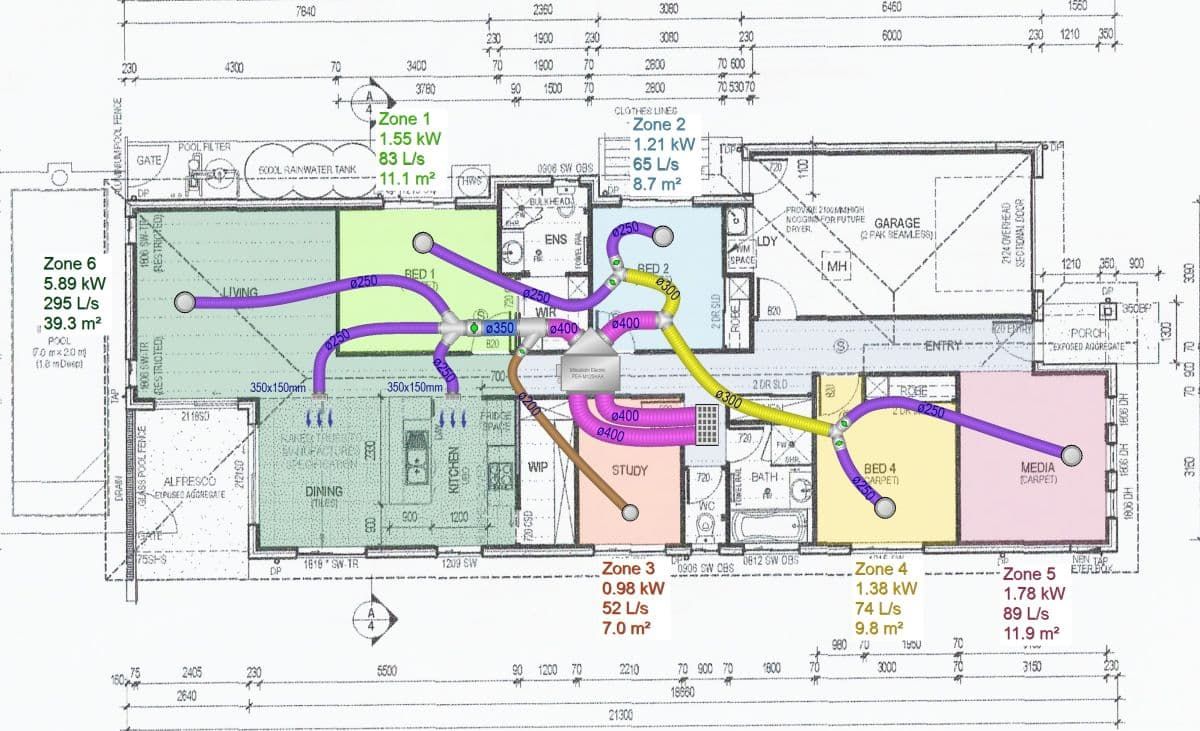
A good design keeps duct runs short and smooth, places outlets where they will mix air well without blowing directly on beds or couches, and puts the return where it can draw air from the whole zone area. Read why duct design matters.
3. How is the equipment selected?
Once the design is set, the indoor and outdoor units are chosen to match the total load, along with the zone controller. Capacity, energy efficiency, noise, brand preference, warranty and budget are weighed together. Most systems we install are inverter reverse-cycle, so they heat as well as cool.
We supply Mitsubishi Heavy Industries, Daikin, Samsung, Hisense, Fujitsu, Mitsubishi Electric, Panasonic, with ZoneTouch zone control as standard and AirTouch 5 as an upgrade. See our brand comparison and ducted packages.
4. How is the property prepared?
Before the install, we confirm access to the roof space, the outdoor unit location and the switchboard, and agree outlet and unit positions with you. You can help by clearing areas under the manhole and outlet positions and moving cars or furniture that block access.
If an old system is being replaced, it is decommissioned and its refrigerant recovered before removal, as Australian law requires. Clear communication at this stage keeps disruption to a minimum.
5. How are the ducts and equipment installed?
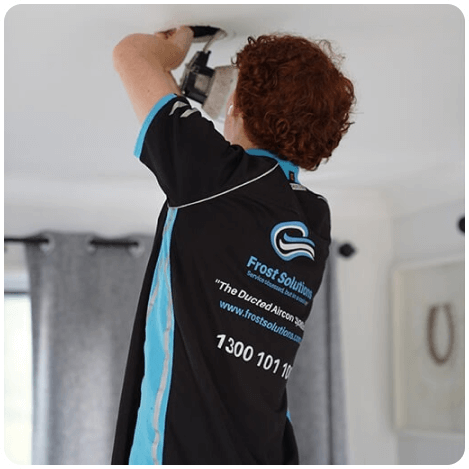
The team mounts the indoor unit in the roof space and the outdoor unit on a pad or brackets, runs and supports the insulated ducts, cuts in and fits outlets and the return grille, runs refrigerant pipework and control cabling, and installs the dedicated electrical circuit.
Our technicians and our own electricians work together on site, so there is no waiting between trades. Ducts are sealed at every joint, supported off the ceiling and kept as straight as possible. Pipework is insulated and protected, and refrigerant joints are pressure tested before the system is charged.
6. How is the system tested and commissioned?
Commissioning confirms the system works as designed. The refrigerant circuit is pressure tested and evacuated before it is opened, the system is run in cooling and heating, airflow and temperatures are checked, zones and controller are set up, and the electrical work is tested.
Any issue is fixed before handover. This stage is where a good installer differs from a quick one; skipping it leads to rooms that never quite get comfortable and faults that appear in the first hot week.
7. What happens at the final inspection and handover?
The work is checked, the site is cleaned up, and the electrical work is certified with an electrical safety certificate. You are then shown how to use the controller, zones and filter, and what servicing the system needs, so you can run it efficiently from day one.
You will also receive your warranty details. Frost Solutions installs carry a 10-year workmanship guarantee, a 10-year duct and pipework warranty, and 5-year parts and labour on the units, once paid in full. See our warranty, and book regular maintenance to keep the system at its best.
What is the bottom line?
A ducted installation goes well when every stage is done properly: scoping, design, equipment selection, preparation, installation, commissioning and handover. With a good install and regular maintenance, a ducted system gives years of reliable, efficient comfort. To start, book a free quote.